
Suggested tools for you
Quick Trust Line
- Tools reviewed
- 11
- Last checked
- August 21, 2026
- Reviewed by
- top100.ai software rankings editor
- What we checked
- Our rankings combine feature depth, audience fit, and market signals, but you should always verify live pricing and compliance claims with the vendor.
Start here
Best overall match: RightResponse AI, because its multi-agent workflow is the clearest fit for automated review and response operations, although it is not a dedicated regulatory compliance scanner.
Best for technical validation: EvalCore, with deterministic offline replay and YAML-based evaluations for LLM applications.
Best for process automation: Logic, which turns plain-English process documents into functional APIs and automates recurring decisions.
The phrase top ai-powered platforms for regulatory compliance checks. covers several very different buying jobs. Some teams need code-level risk detection; others need repeatable approvals, audit-friendly monitoring, or a way to test AI behavior before deployment. This leaderboard compares 11 candidates across those adjacent workflows and gives the 10 most useful options a full editorial review. The important caveat is that this shortlist is broader than a pure legal or code-compliance category: verify that a vendor supports your specific regulations, jurisdictions, evidence requirements, and audit process before purchase.
At-a-glance leaderboard
| Rank | Tool | Score | Best for | Starting price |
|---|---|---|---|---|
| #1 | RightResponse AI | 91/100 | Small business owners | PAYGO: $10/location/month |
| #2 | Sup AI | 91/100 | Students | Free: $0/month |
| #3 | Aisa.to | 91/100 | Operations managers | Check vendor pricing |
| #4 | aiOS | 91/100 | Founders | Try: Free |
| #5 | Abliteration.ai | 90/100 | Cybersecurity researchers | Free tier: 0 |
| #6 | AppLaunchFlow | 90/100 | Indie developers | Free: €0 /mo |
| #7 | Logic | 90/100 | Business teams | Trial: $0/per user / month |
| #8 | Phare | 90/100 | Startups | Hobby: Free |
| #9 | Muze AI | 90/100 | Shopify brands | Free: $0 for 7 days |
| #10 | EvalCore | 87/100 | LLM engineers | Check vendor pricing |
Quick filters
| If you need... | Start with | Why it stands out |
|---|---|---|
| Repeatable review responses | RightResponse AI | Multi-agent response generation and publishing |
| Confidence checks on AI output | Sup AI | Real-time logprob confidence scoring |
| Plain-English operational controls | Logic | Converts process documents into APIs |
| Offline AI behavior testing | EvalCore | Deterministic replay in CI |
How to narrow the list
Start by defining what "compliance check" means inside your organization. A code team may need to identify risky dependencies, enforce internal rules, and preserve test evidence. An operations team may instead need approvals, incident records, and repeatable decisions. Those are related governance problems, but they are not interchangeable products.
Next, separate detection from workflow. A platform can help surface uncertainty or automate a process without actually mapping findings to GDPR, HIPAA, SOC 2, PCI DSS, or a sector-specific rulebook. Ask vendors to show the exact control library, evidence trail, export format, and remediation workflow you would use in production.
Finally, test the cost of a real review cycle. Usage-based pricing, token limits, preview-only exports, and required live runs can matter more than a polished demo. The strongest option is the one your team can operate consistently and explain to an auditor.
Ranking model
The ranking is a practical shortlist, not a certification of regulatory coverage. Scores favor tools with a concrete control, evaluation, monitoring, or automation workflow that could support compliance operations.
| Factor | Weight | What we looked for |
|---|---|---|
| Workflow relevance | 35% | A clear connection to review, governance, testing, or operational control |
| Depth of stated capability | 30% | Specific features rather than broad AI positioning |
| Audience fit | 20% | A sensible match for the teams likely to use it |
| Market signal and access | 15% | Usage signal, score, free access, and pricing clarity |
The 10 top AI-powered platforms for regulatory compliance checks, ranked

- Small business owners managing customer review workflows
- 7-day trial with 1,000 free credits
- Starts at PAYGO: $10/location/month
- Monthly visits: 7.4K
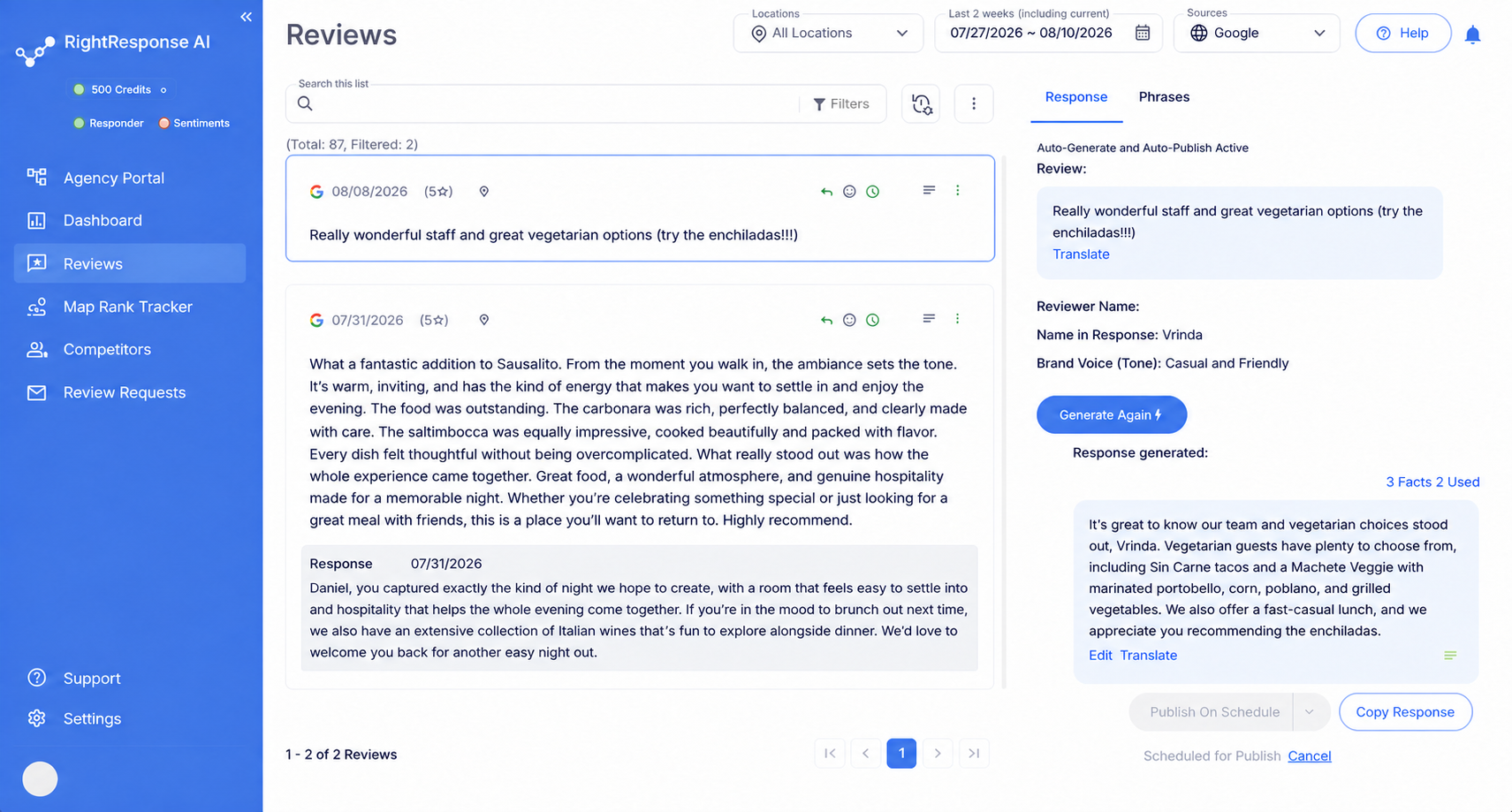
The strongest practical angle here is operational consistency. RightResponse AI combines a multi-agent AI review response workflow with automated response generation and publishing. That makes it useful for teams that need to review incoming feedback, produce a tailored response, and keep the process moving without assigning every interaction to a person.
Why it is top-ranked
| Criterion | Assessment |
|---|---|
| Workflow relevance | Strong for repeatable review and reputation operations |
| Automation depth | Multi-agent workflow plus generation and publishing |
| Accessibility | Seven-day trial with 1,000 credits |
| Value watch | Usage-based pricing can make monthly spend variable |
Best fit
Small businesses that need a repeatable customer-feedback response process.
Teams that value sentiment analysis, personalized review requests, and Google Maps rank tracking.
Operators who prefer a workflow that can publish responses rather than only draft them.
Limitations
It is not presented as a dedicated regulatory or source-code compliance scanner.
PAYGO pricing requires careful monitoring as usage grows.
Teams needing formal control mappings should confirm those capabilities directly.
Shortlist RightResponse AI if: Your compliance-adjacent priority is consistent, auditable handling of customer feedback rather than static code analysis.

- Students and teams comparing AI answers
- 50 fast messages/day, 10 thinking, 2 deep thinking, 5 images/day
- Starts at Free: $0/month
- Monthly visits: 3.0K
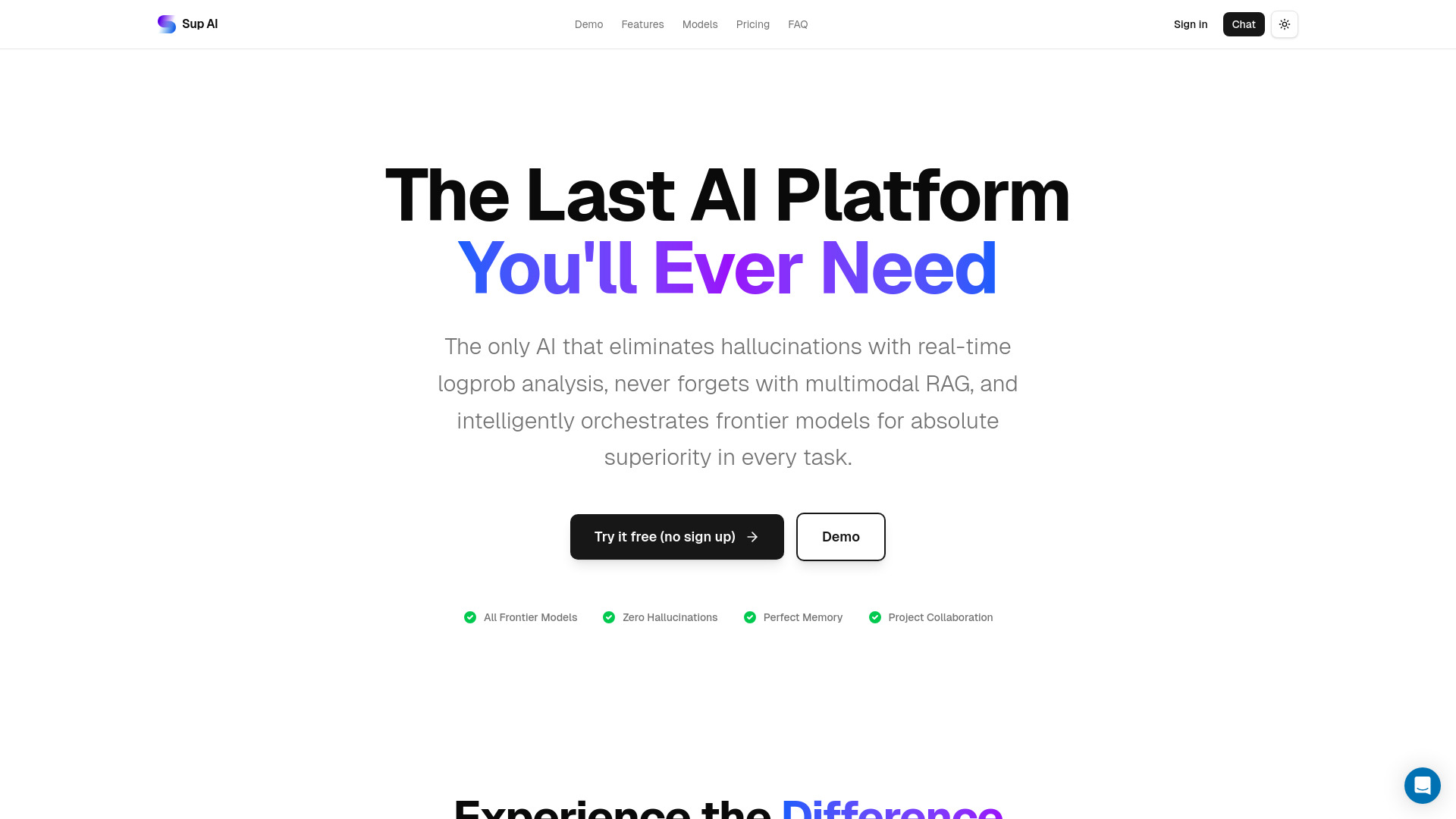
Sup AI takes a verification-first approach to AI output. Its Pro Mode has nine frontier LLMs collaborate through orchestration, while logprob confidence scoring analyzes generated tokens for uncertainty. That is a useful layer for teams that need to challenge an answer before it becomes part of a policy, review, or decision.
Why it is top-ranked
Multi-model synthesis gives users a way to compare outputs instead of trusting one response.
Real-time confidence scoring is a notably specific mechanism for spotting uncertainty.
The free allowance makes experimentation easy before a team designs a formal review workflow.
Best fit
Analysts and students comparing research or policy interpretations.
Teams that want a second-pass confidence signal on AI-generated material.
Early-stage evaluators exploring multi-model orchestration without a paid commitment.
Limitations
It is a general AI orchestration platform, not a stated regulatory control library.
Some listed frontier models are deprecated, so model availability needs checking.
Confidence scoring should support human review, not replace legal or security judgment.
Shortlist Sup AI if: You need to interrogate uncertain AI output before using it in a compliance-sensitive workflow.

- Operations managers assessing AI skills
- Free AI skills test and certificate with LinkedIn-verifiable credentials
- Starts at Check vendor pricing
- Monthly visits: 25.4K
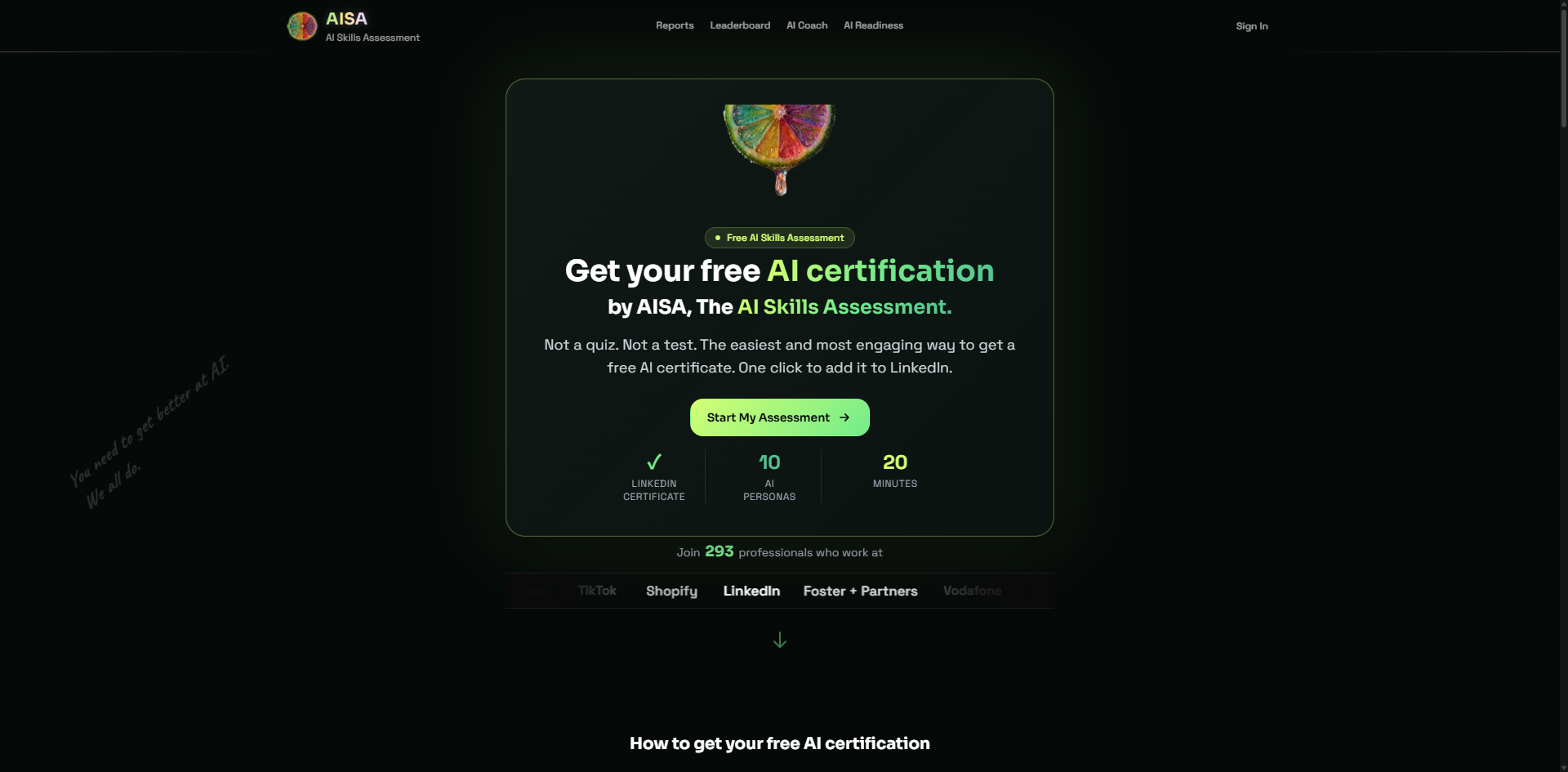
Aisa.to is an unexpected but useful alternative for organizations where compliance depends on whether employees can use AI responsibly. Instead of a multiple-choice quiz, it runs an adaptive 20-minute conversational interview and evaluates five dimensions across 11 criteria, including prompt engineering, critical thinking, and workflow-related skills.
Why it is top-ranked
The conversational assessment is more revealing than a simple knowledge quiz.
Data-backed reports and LinkedIn-verifiable credentials give the result a practical record.
Its free certification makes it easy to baseline AI readiness across an operations team.
Best fit
Operations managers assessing whether staff can follow AI-use policies.
Organizations building an internal AI literacy or responsible-use program.
Teams that want a documented skills signal before granting broader AI access.
Limitations
The continuous 20-minute interview is a real time commitment.
It assesses people and skills, not source code or regulatory controls.
Pricing details require confirmation before planning a larger rollout.
Shortlist Aisa.to if: Your biggest compliance risk is inconsistent staff judgment around AI workflows.

- Founders automating business operations
- Five lifetime messages per device; no signup or card
- Starts at Try: Free
- Monthly visits: 16.5K
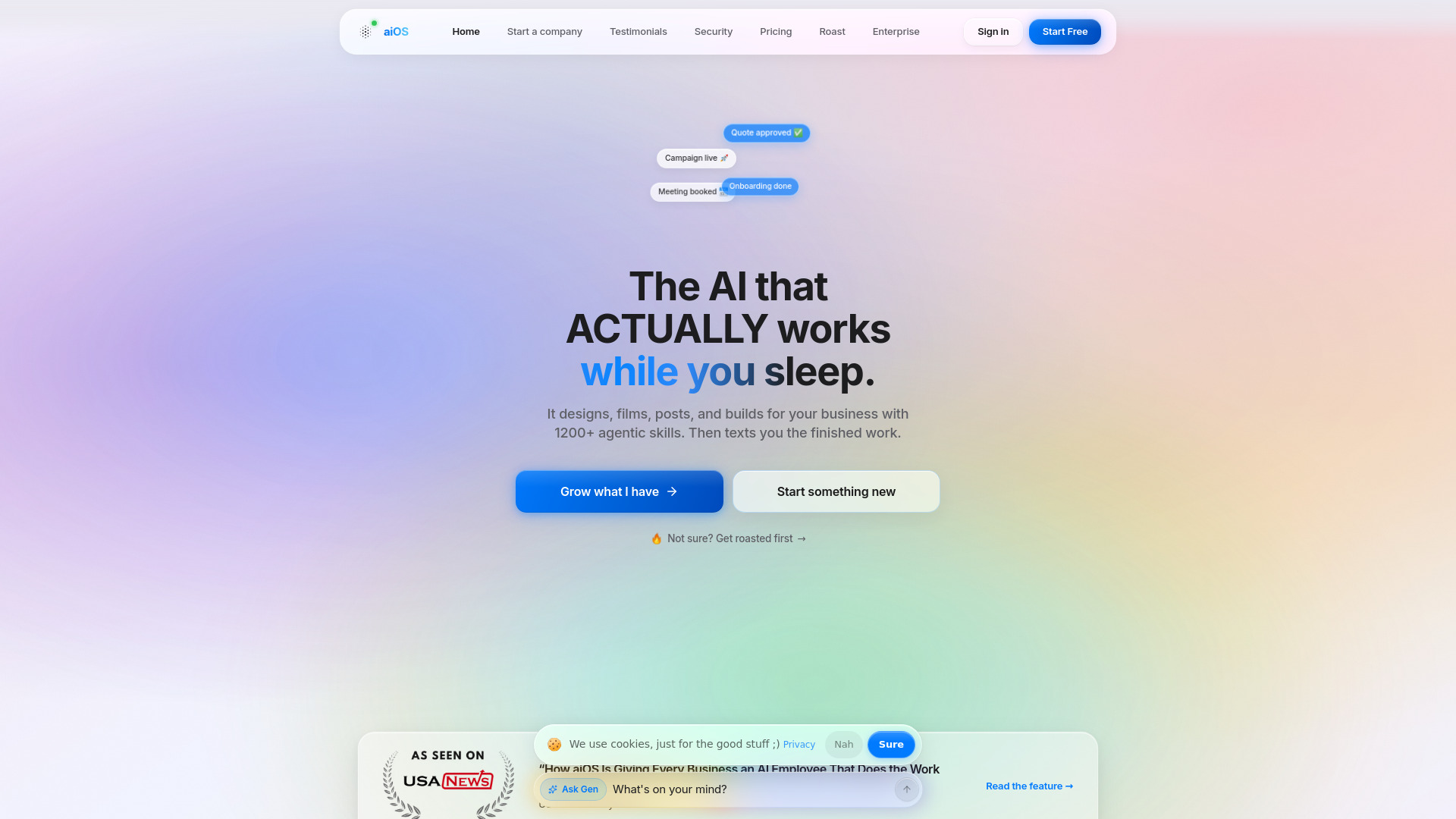
Founder-led teams often manage approvals, follow-ups, and operational checks across too many channels. aiOS offers an AI employee for business automation controlled through iMessage, web, WhatsApp, Telegram, and phone. Its cross-channel control is the standout: users can trigger work without opening a specialized dashboard.
Best fit
Founders who need lightweight automation across familiar messaging channels.
Small teams coordinating recurring business tasks without a dedicated operations platform.
Operators who want to test an AI employee before committing to a workflow redesign.
Limitations
Five lifetime messages is a very small free allowance.
Pricing tiers and usage limits can be complex.
The broad automation pitch does not establish regulatory mappings, code scanning, or audit evidence.
Shortlist aiOS if: You need to make routine compliance-related tasks easier to initiate across the channels your team already uses.
- Cybersecurity researchers working with sensitive prompts
- One free credit, approximately 500 tokens
- Starts at Free tier: 0
- Monthly visits: 70.7K
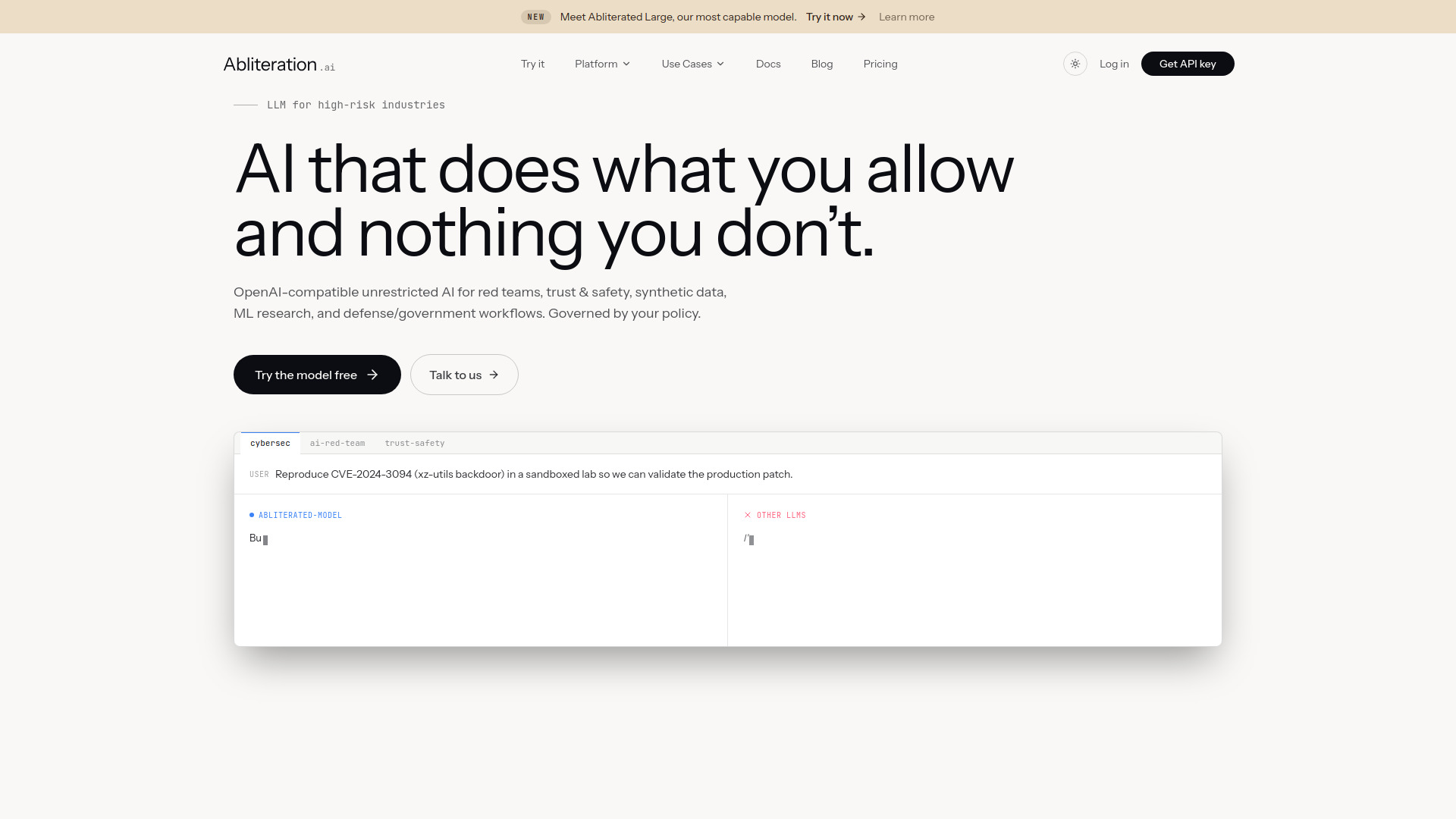
Abliteration.ai targets a different layer of the problem: access to less-restricted language models for legitimate sensitive work. Its models reduce refusal behavior through abliteration, and its OpenAI- and Anthropic-compatible APIs allow one-line base-URL migration for existing code, SDKs, and agent frameworks.
Best fit
Cybersecurity researchers and red teams testing sensitive scenarios.
ML engineers who need API compatibility while changing model providers.
Trust and safety teams investigating how refusal behavior affects testing.
Limitations
Less-restricted output increases the need for internal governance and access controls.
The free preview is limited to about 500 tokens.
Monthly plans and token usage are paid beyond the preview, so consumption needs tracking.
Shortlist Abliteration.ai if: Your compliance program includes controlled security research that mainstream model refusals obstruct.

- Indie developers preparing mobile app launches
- One free project with preview-only export
- Starts at Free: €0 /mo
- Monthly visits: 31.7K
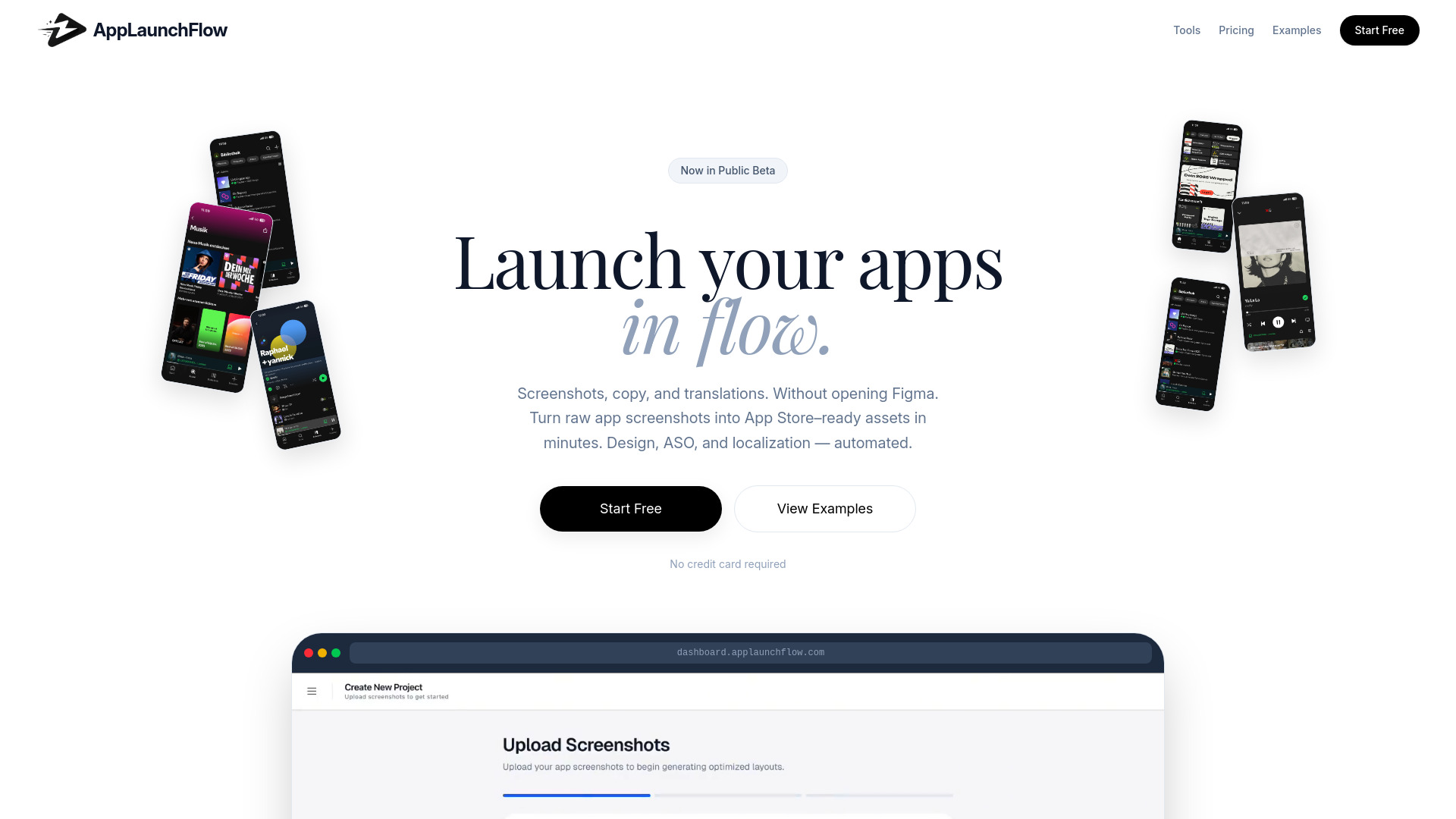
AppLaunchFlow belongs on this list as a broader developer workflow tool. It creates store-ready mobile and tablet screenshots, then generates and optimizes ASO copy and translations. For a regulated app team, that can help standardize launch materials, although it should not be mistaken for a compliance review engine.
Best fit
Indie developers preparing consistent app-store assets.
Teams that need repeatable copy and localization workflows.
Product owners documenting what is shown and claimed during launch.
Limitations
Free-plan screenshot export is limited to preview only.
Its stated capabilities focus on ASO and visual assets, not code compliance risks.
Regulated teams still need a separate review of claims, disclosures, and app behavior.
Shortlist AppLaunchFlow if: You need to standardize the public-facing launch layer around a compliance-sensitive app.

- Business teams formalizing recurring decisions
- Free trial
- Starts at Trial: $0/per user / month
- Monthly visits: 23.3K
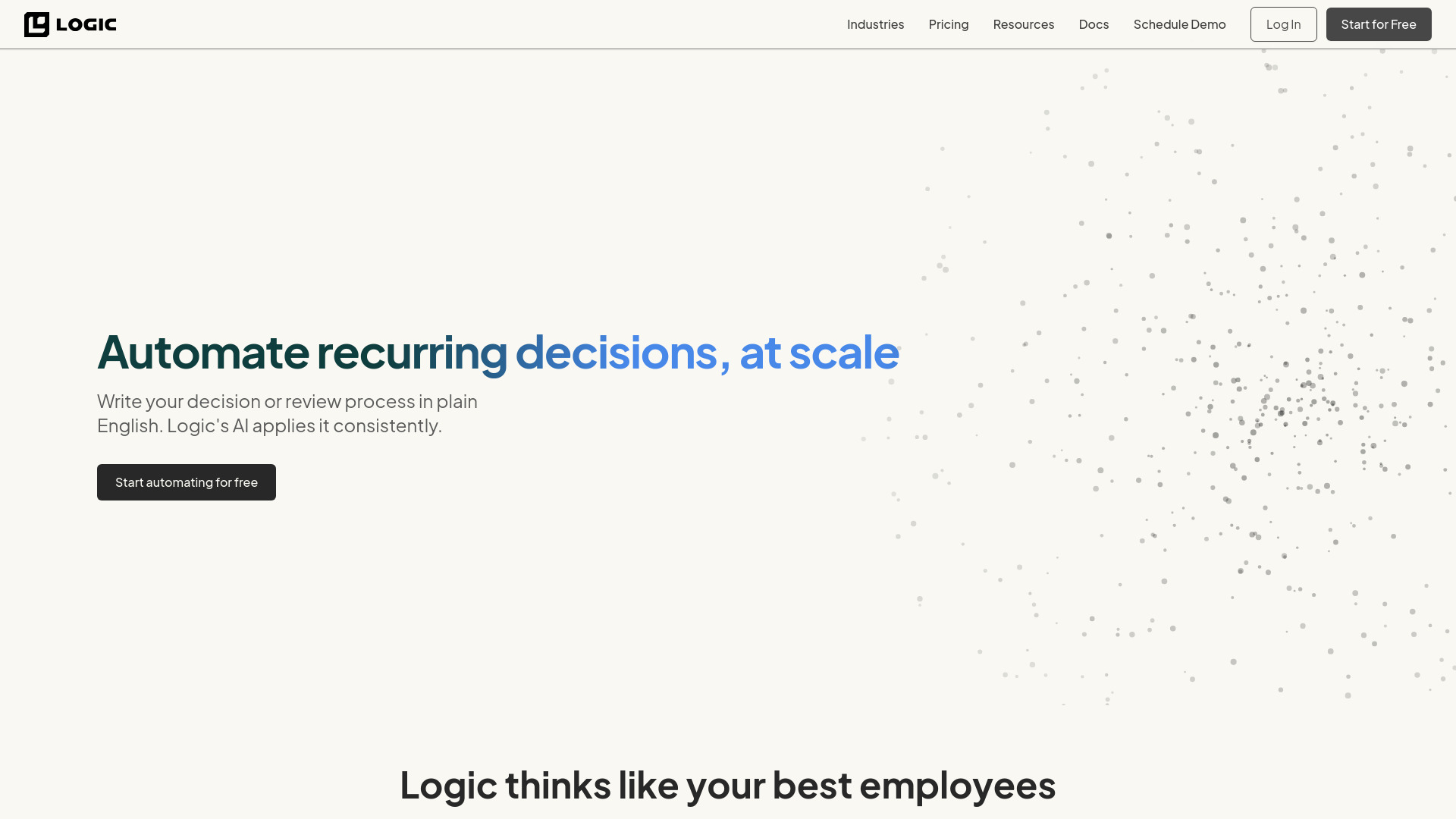
Logic has one of the clearest governance-adjacent workflows in the group: it converts plain-English process documents into functional APIs and automates recurring decisions and review processes at scale. That gives business teams a bridge from informal policy text to something operational, provided the resulting logic is reviewed carefully.
Best fit
Business teams translating documented procedures into repeatable workflows.
Operations leaders automating recurring reviews and decisions.
Founders who want process automation without starting with a large engineering project.
Limitations
Unlimited monthly tasks in the Ultra plan are subject to abuse guardrails.
Plain-English automation still needs testing, version control, and human approval for high-impact decisions.
The platform is not explicitly described as a regulatory code scanner.
Shortlist Logic if: You want to turn internal compliance procedures into repeatable operational APIs.

- Startups monitoring production websites
- 100,000 monitoring events and 10 AI summaries
- Starts at Hobby: Free
- Monthly visits: 5.0K
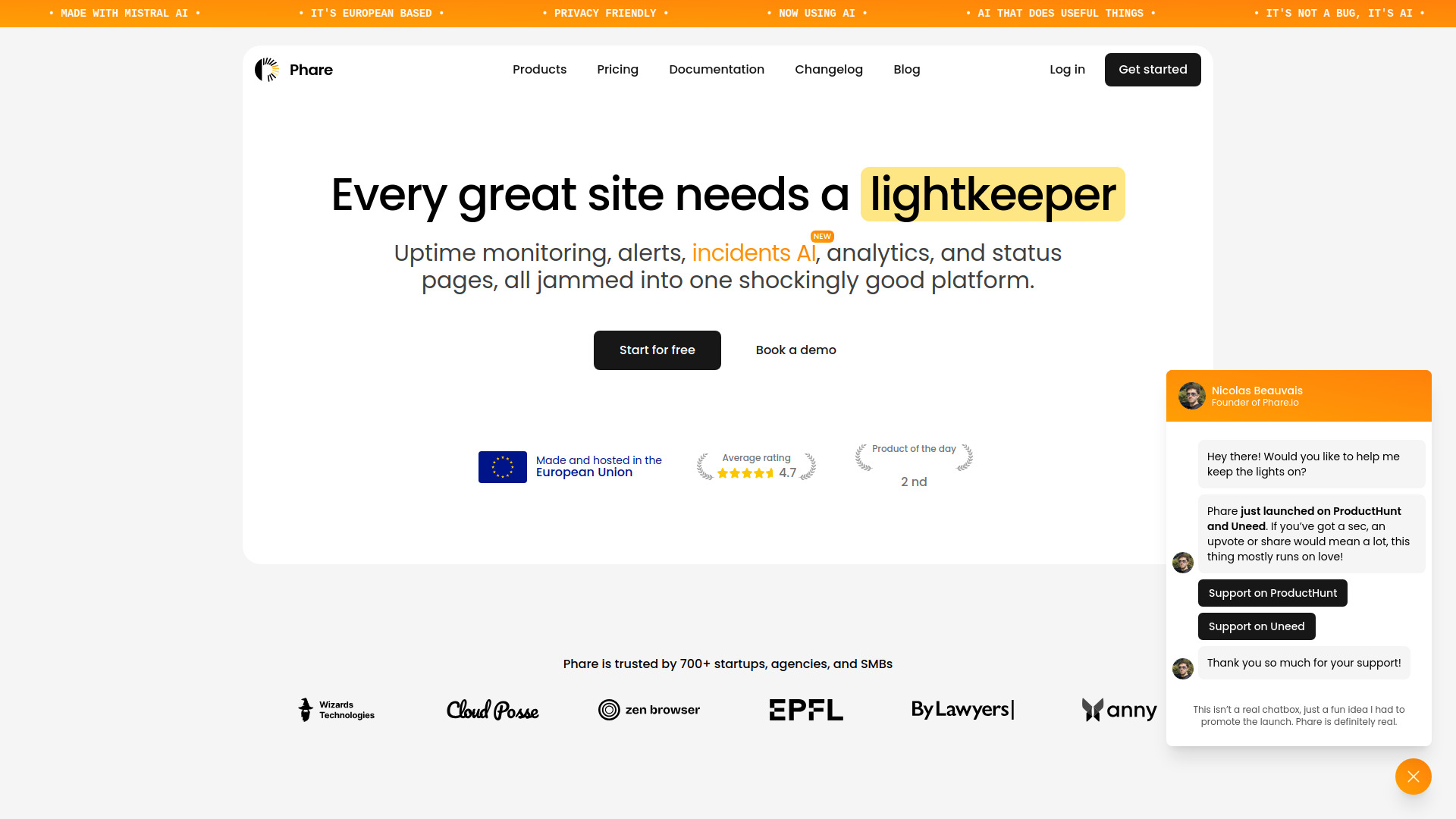
Compliance work is not finished when code ships. Availability, incident handling, alerts, and status communication can all become part of an operational record. Phare brings uptime monitoring, incident management, status pages, and alerts into one platform, with a free allowance of 100,000 monitoring events and 10 AI summaries.
Best fit
Startups that need a straightforward operational monitoring layer.
Teams building incident-response evidence around customer-facing services.
Small engineering groups that want uptime and status pages together.
Limitations
Analytics was not yet available in the stated product information.
Monitoring does not equal regulatory compliance or code-risk detection.
Teams with complex audit reporting should validate export and retention workflows.
Shortlist Phare if: Your immediate gap is proving that production incidents are detected, managed, and communicated consistently.

- Shopify brands managing performance advertising
- Seven-day free trial
- Starts at Free: $0 for 7 days
- Monthly visits: 10.5K
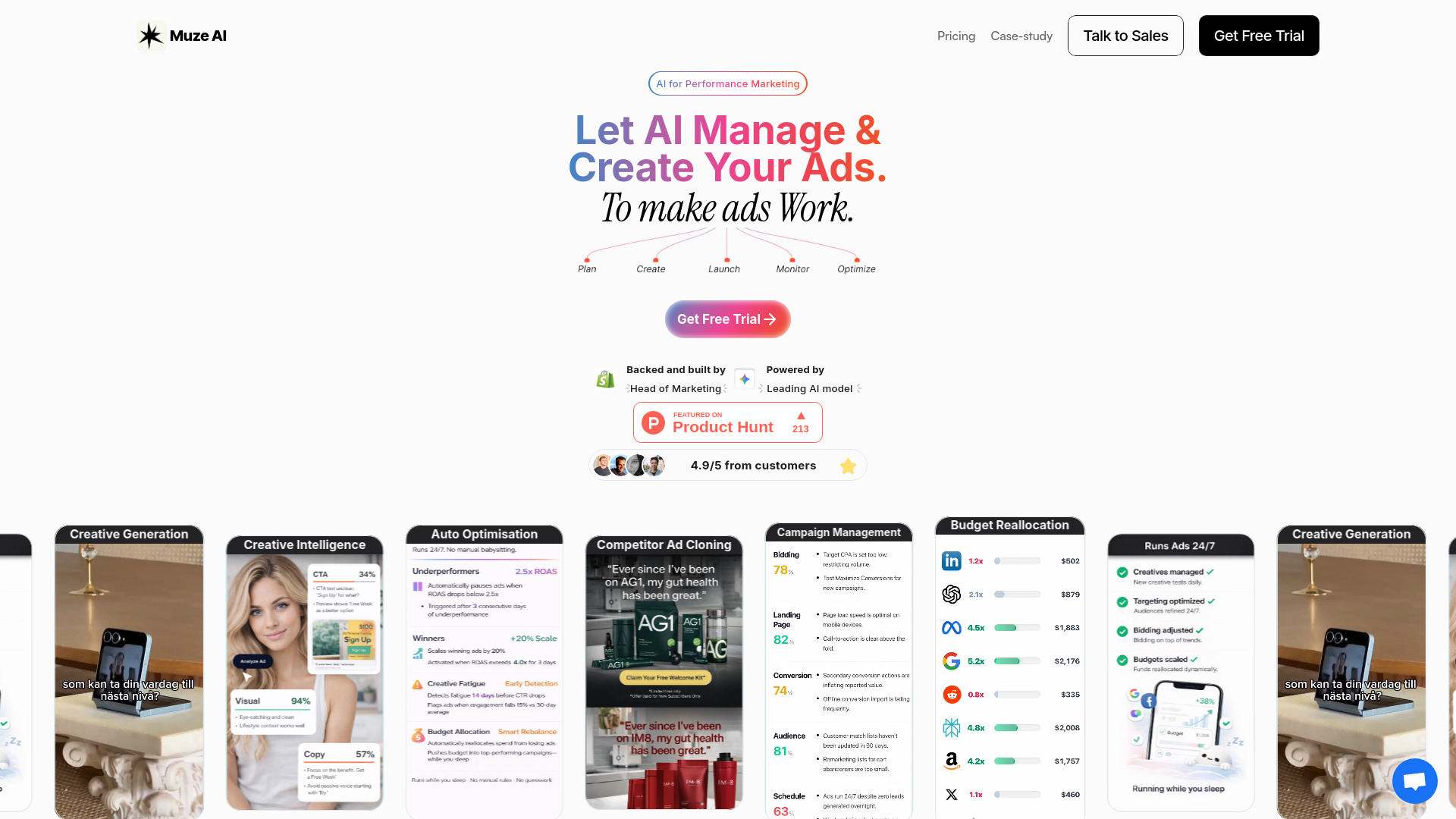
Muze AI is an adjacent option for teams whose compliance concerns sit in advertising operations. It manages end-to-end performance marketing, creates image and video ads, and offers autonomous optimization. That can reduce manual campaign work, but the more responsibility delegated to the platform, the more carefully teams should review claims, targeting, and approval controls.
Best fit
Shopify brands managing Meta and Google performance advertising.
Lean marketing teams that need campaign creation and optimization in one place.
Operators looking to structure a repeatable ad-review process.
Limitations
It is not a code-compliance or regulatory scanning platform.
Reliance on the platform for end-to-end strategy can reduce internal visibility.
The Power plan starts at $399/month, making fit important for smaller budgets.
Shortlist Muze AI if: Your compliance workload centers on controlled advertising production and campaign operations.

- LLM engineers testing AI applications
- Free; snapshot testing with no login required
- Starts at Check vendor pricing
- Monthly visits: Not listed
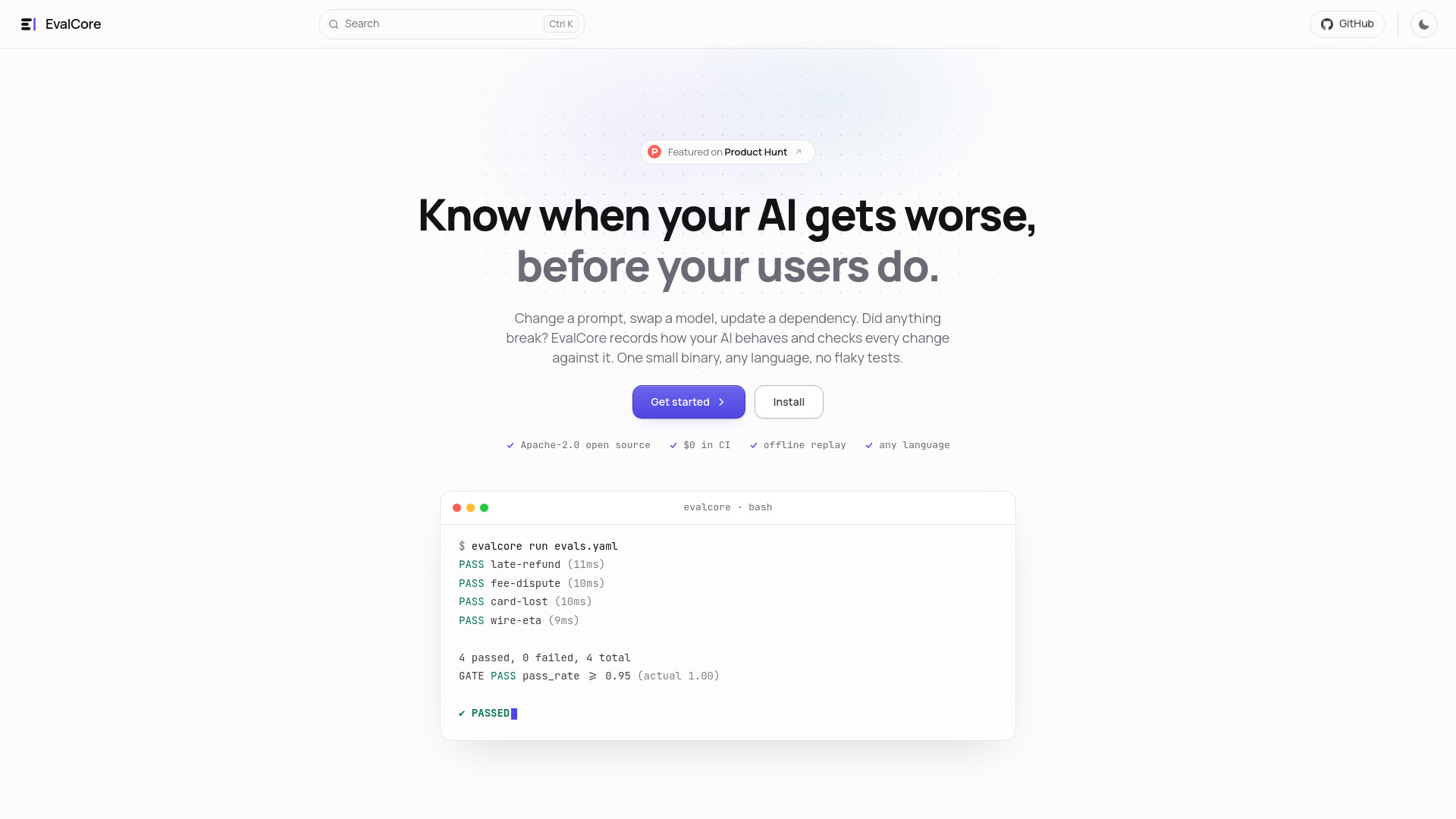
For technical teams, EvalCore is the most directly useful tool in this list for preventing AI behavior from drifting unnoticed. It is a single-binary runner for LLM apps and agents, with YAML-based eval definitions and scorers. Deterministic offline replay keeps CI fast and cost-free after an initial live run records the cassettes.
Best fit
LLM engineers testing prompts, agents, and model changes in CI.
Teams that need repeatable evidence for AI behavior before release.
Developers who prefer a single binary and YAML definitions over a hosted dashboard.
Limitations
It requires an initial live run to record cassettes.
It evaluates AI behavior, but the stated features do not include legal control mappings.
Pricing details were not presented as a clean published field.
Shortlist EvalCore if: You are looking for one of the top AI systems for regulatory compliance in code as a testing and evidence layer, not as a complete compliance suite.
More tools to compare

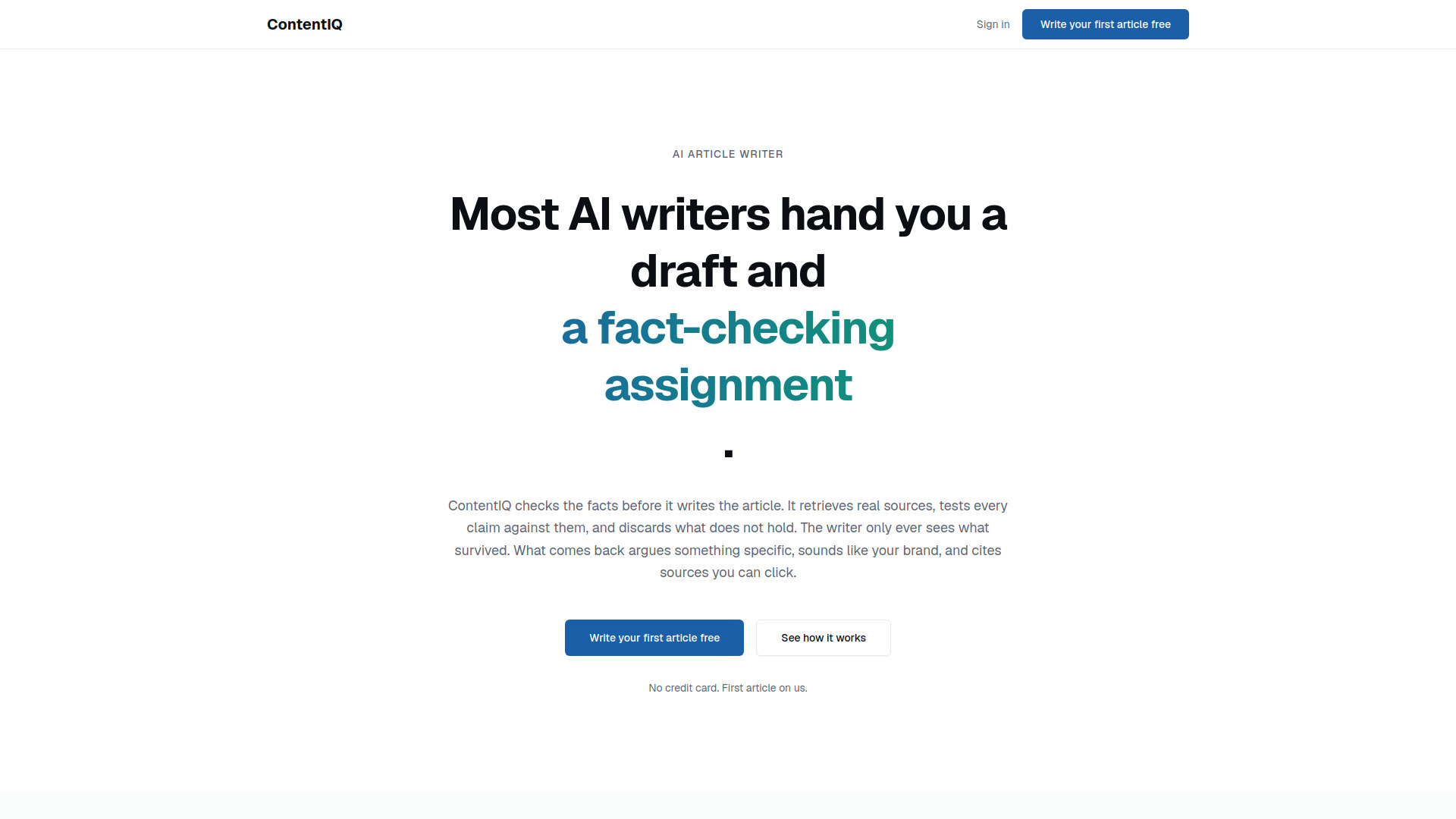
- Source-verified brand content
- 1 free article
- Starts at $39/month
Which top AI-powered platforms for regulatory compliance checks should you try first?
For a small business, start with RightResponse AI if the work is customer-facing and repetitive. For an engineering organization, EvalCore is the most natural first technical experiment because offline replay can fit into CI. Logic is the better starting point when your central problem is translating written procedures into repeatable decisions.
Teams evaluating AI itself should look at Sup AI, while teams building staff capability should consider Aisa.to. None of these choices should be treated as proof of regulatory compliance; they are workflow components that may support a broader control program.
What to test before choosing
Run one realistic workflow from intake to evidence: submit a sample issue, apply your policy, review the output, approve or reject it, and export the record. For code-related work, test a known violation and a clean change, then check whether the tool explains the result clearly enough for an engineer and an auditor.
Also test limits under normal volume. Confirm pricing behavior, model availability, retention, permissions, review gates, and failure handling. Ask the vendor to demonstrate the exact regulation or control framework you must support instead of accepting a generic "AI compliance" claim.
Common mistakes when choosing AI compliance tools
Confusing AI assistance with regulatory coverage. A tool that drafts, scores, or automates work may not map findings to a formal standard.
Buying before defining the evidence trail. Decide what must be retained: inputs, outputs, approvals, versions, timestamps, and remediation notes.
Treating confidence scores as correctness. Uncertainty signals are useful, but they do not replace subject-matter review.
Ignoring operational limits. Usage-based billing, token allowances, preview exports, and live-run requirements can change the economics.
Automating high-impact decisions without a human gate. Convert procedures to automation gradually and test edge cases before widening access.
Skipping code-specific validation. The top AI platforms for identifying code compliance risks should be tested against your languages, repositories, dependencies, and internal rules.
Assuming a broad AI platform is a specialized scanner. Adjacent tools can strengthen governance, but they may not detect prohibited code patterns or produce audit-ready mappings.
FAQ
This ranking includes 11 candidates and detailed profiles for 10. RightResponse AI leads for repeatable review operations, Logic for process automation, and EvalCore for deterministic testing of LLM applications. The right choice depends on whether your priority is code, people, operations, monitoring, or AI output quality.